
Taking In the Good
— A text by George Peterburs —
September 2026

«Our brain is continuously being reshaped – we can take more responsibility for our brain by influencing the cultivation of positive states.»
Richard J. Davidson, neuroscientist
Do you know this feeling? You had a wonderful day, but in the evening a single unkind comment is enough to make your good mood vanish. Our brain is naturally wired to hold onto the negative like Velcro and let the positive slide off like water. The good news: we can influence how our brain is shaped by experience. This is exactly where Positive Neuroplasticity comes in.
What is Positive Neuroplasticity at its core?
The brain is plastic and keeps changing throughout life. Neuroplasticity happens largely automatically. But through our attention, experiences, and conscious practice, we can help shape what our brain learns and which connections are strengthened.
Positive, or self-directed, neuroplasticity describes the conscious activation, deepening, and cultivation of favourable states of mind and experiences. Positive experiences are generally present in every person's life, even in everyday situations. However, we usually haven't learned to sufficiently anchor these fleeting experiences at a neural level, so that they remain durable and stay in the foreground, rather than receding into the background again at the next disturbance.
The goal is to move from "states" to "traits" – from fleeting positive states to lasting qualities of mind and brain.
As neuroscientist Richard Davidson and others describe it, the goal is to move from "states" to "traits". These neural qualities can now be demonstrated through brain scans – and not only in monks and long-term meditators. Once these positive networks are established, we can activate them even in difficult moments, bring them into awareness, and thereby cope better with difficulties. This is also referred to as a "resilient brain".
Positive neuroplasticity can certainly be seen as a counterpart to the innate, evolutionarily conditioned negativity bias of the human brain.
The three-legged stool
About ten years ago, in a first personal conversation, Rick Hanson vividly explained to me the difference between mindfulness and Positive Neuroplasticity. Using his fingers, he described a three-legged stool: one leg stands for mindfulness, the second for compassion, and the third for cultivation.
Mindfulness is very important, but on its own – with just one long leg – the stool cannot stand.
It also needs strong compassion, and finally cultivation. This is exactly what Positive Neuroplasticity is about: the ability to cultivate good, strengthening experiences in mind and brain. It's about learning how the brain learns from experience, and how the neuroplastic process is fostered.
Why the good disappears so quickly
"The brain is good at learning from bad experiences, but it learns poorly from good ones," says Rick Hanson.
In Western culture, experiencing positive events is generally given great importance. Yet many people have considerable difficulty translating these positive experiences into lasting neural structures. The "conversion rate" of positive states into enduring neural traits is, as a rule, very low in people. We often seek out numerous, ever-new – and expensive – stimuli, without these having any lasting effect.
Perhaps we have even become experience junkies – without giving the experiences that are already there enough time to truly take effect.
The prerequisites for activating and deepening positive experiences are:
noticing the everyday positive experiences present in every person's life
consciously pausing to consolidate and deepen these experiences – with the help of insights from neuroscience
self-directed cultivation of personally relevant experiences
A positive experience is not the same as a positive thought – and this work is not about positive thinking. What matters is that we don't just understand an experience mentally, but perceive it emotionally and physically. This conscious feeling and lingering can help an experience become especially vivid and have a lasting effect.
How George came to this approach
When I first came across Rick Hanson and his work, Positive Neuroplasticity was completely new territory for me. As a philosopher and meditator, my priority had always been to gain insight into the nature of things and of the world. How positive insights could lead to lasting, strengthening states such as happiness, compassion, or safety was a mystery to me.
Safety, for example, is – like so much else – a positive experience. And one that we can actively cultivate and experience every day. We can consciously orient our nervous system toward everyday experiences of security and protection, making it less susceptible to anxiety. That was a new insight for me, one that truly opened my eyes.
There are many ways to make good use of Positive Neuroplasticity. Rick highlights three in particular:
strengthening inner resources and one's own resilience
deliberately linking positive experiences with previously experienced negative ones, in order to reprocess and integrate them
fostering spiritual growth
Rick has explored this last theme in particular in his work on "Neurodharma".
Who is this training suited for – and where are its limits?
Hermann Hesse once wrote: "Everyone can perform magic, everyone can achieve their goals, if they can think, if they can fast."
For me, there's an interesting connection to today's research in this: we are not entirely at the mercy of our habitual patterns of thinking and experiencing. Through attention, practice, and repeated experience, we can help shape how our mind and brain develop.
In principle, anyone who can perceive a beneficial experience and hold it in awareness for a while can benefit from this practice. At the same time: anyone who is easily overwhelmed by severe psychological strain or traumatic experiences should only practise this form of inner work with appropriate therapeutic support. Whenever possible, we hold a brief personal conversation with all course participants before the course begins, to assess any potential psychological vulnerabilities.
What participants take home into everyday life
In the training, participants learn to notice positive experiences more consciously, to pause, and to deepen them both mentally and physically.
It is also essential to recognise and become aware of the experiences and inner strengths that are personally relevant – experiences that may have been missing "back then", but that we can consciously cultivate "today", and that, once integrated as a habit into daily life, decisively change our lives.
We can actively strengthen positive experiences at the neural level – and thereby engage with painful experiences from the past in a new way.
Ultimately, it's also about developing trust in the fact that we can actively strengthen positive experiences at a neural level – and that these can increasingly support us in engaging with painful experiences from the past in a new way.
A text by George Peterburs, in collaboration with Stefanie Weilenmann
George leads the weekend "Taking In the Good" from Friday, 18 to Sunday, 20 September 2026 at Landguet Ried – a mindfulness-based training that combines the latest findings from neuroscience with practice that's easy to apply in everyday life. No prior experience is required.
Would you like to experience for yourself how positive experiences can be permanently anchored in the brain? Find all details about the "Taking In the Good" course here >>>
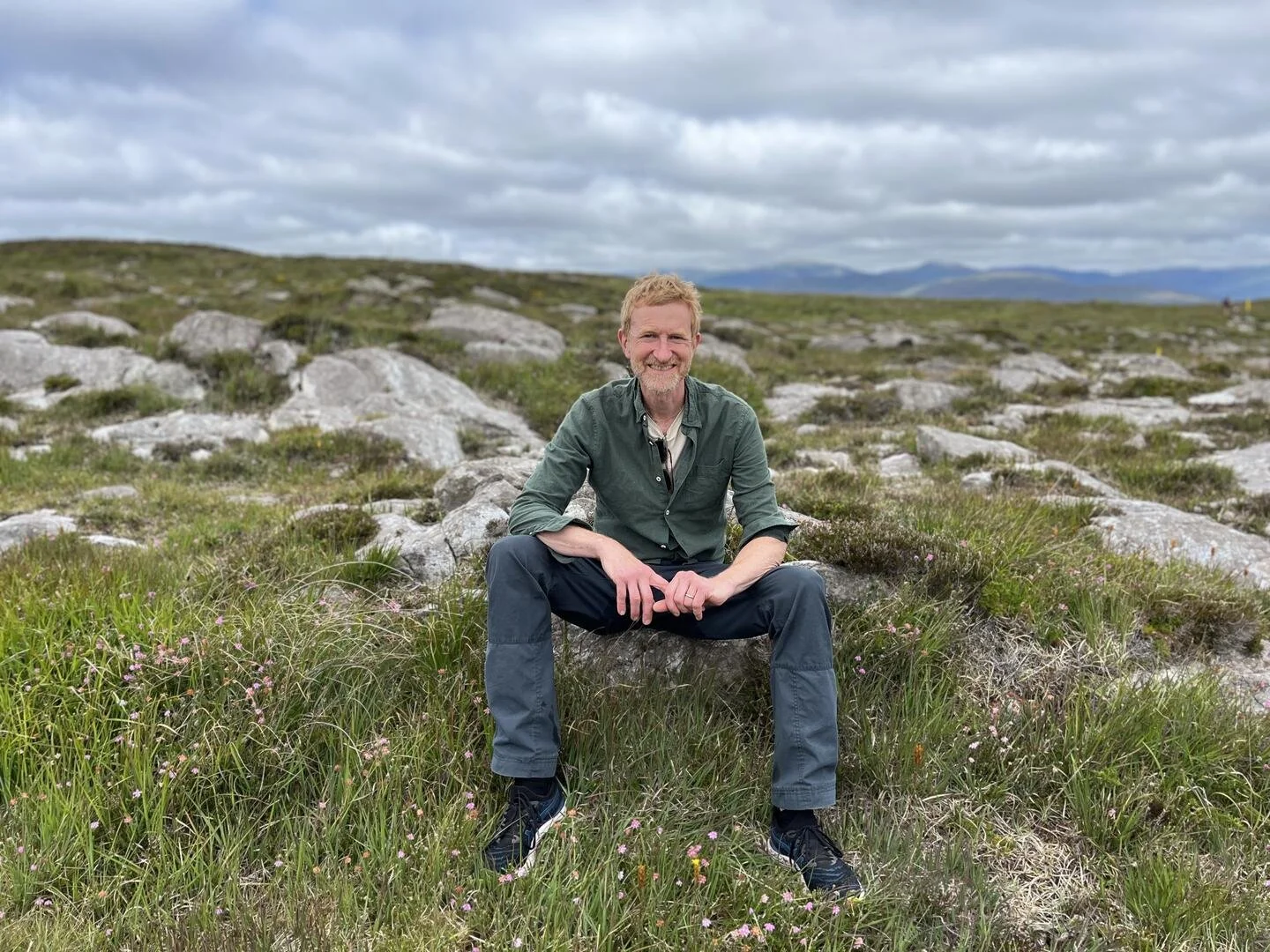
George Peterburs is a certified coach, teacher of mindfulness, resilience, and Positive Neuroplasticity, and an advisor on wellbeing and cultural change in organisations. Among other things, he trained at the Oxford Mindfulness Centre and developed his own mindfulness-based training programme – the Being–Doing Balance. George holds an M.A. in Philosophy from Humboldt University Berlin and is accredited by Rick Hanson as a teacher of Positive Neuroplasticity.