
The social and spiritual dimension of fasting
— A text by Christoph Albrecht —
November 2026

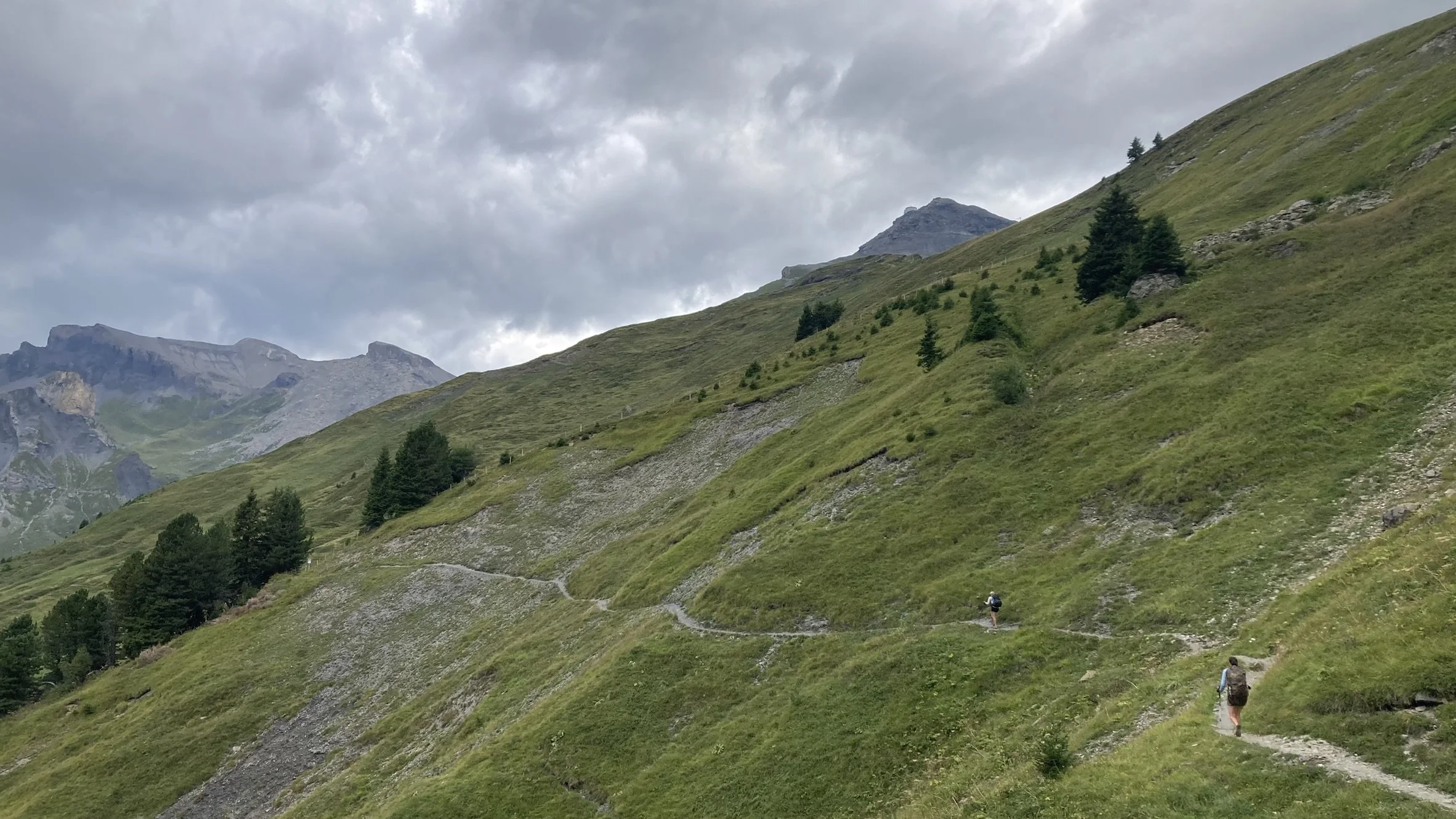

Fasting affects body and soul – but what does it do in the world? Christoph Albrecht SJ explores the social and spiritual dimension of fasting: from Basil the Great through nonviolent liberation movements to Isaiah – and asks how fasting can make us more sensitive without leaving us circling around ourselves.
«If all peoples were to accept the counsel of fasting to settle their disputes, nothing would any longer prevent the deepest peace from reigning in the world.»
(Basil the Great, 2nd Homily on Fasting, quoted in: Anselm Grün OSB. Fasten. Münsterschwarzacher Kleinschriften No. 23. Münsterschwarzach: Vier-Türme-Verlag 1984, pp. 19f)
Peoples would no longer rise up against one another, there would be no more highwaymen and pirates, and «fasting would teach everyone to give up the love of money, of superfluous things and, in general, the inclination to hostility.» (ibid.)
Fasting and peace
What Basil the Great wrote in the 4th century about the effect of fasting has lost none of its relevance. The fact is that only a vanishingly small part of the population fasts. Even fewer people practise fasting quite consciously in order to see more clearly in a tense or conflict-ridden situation and to look for paths to reconciliation.
Hildegard Goss-Mayr and her husband Jean Goss promoted nonviolent communication during the French-Algerian civil war. In this context they engaged with fasting:
«Fasting is an ancient instrument, used in many religions (Buddhism, Hinduism, Judaism, Islam, Christianity), for personal purification and social liberation. […] For those practising nonviolence, who seek to bring the power of truth and love into their actions, it is absolutely necessary to uncover the sources that make these powers grow within them. Fasting is one of these sources.» (On the meaning of fasting, in: Hildegard Goss-Mayr, Der Mensch vor dem Unrecht, Spiritualität und Praxis gewaltloser Befreiung, Thalia, Vienna (4th edition) 1981, pp. 101–103; ISBN 3-203-50786-2.)
Goss-Mayr tells various stories from struggles for liberation in which nonviolent action contributed substantially to positive turns. On the role of political fasting she relays the testimony of a friend, who told her that «in the course of fasting he always feels a great joy, which stems from the awareness of having established a deep relationship of love with the opponent. Through the sacrifice of fasting, the enemy is surrounded, carried and embraced by the power of love that goes out from the person fasting – in contrast to the forces of hatred and lies that usually erupt in conflicts and reinforce each party to the conflict in that direction. Through fasting, however, the opponent is influenced by the power of love and challenged to take on a new attitude.» (ibid.)
Fasting in everyday life
Probably far less spectacular, and yet of decisive importance for living with conflict situations, intermittent fasting or targeted short-term fasting before important decisions has become a practice today. Perhaps only a few people do this systematically, but whoever perceives their own nervousness as an uneasy feeling in the stomach and takes this into account when eating is already on the trail of a holistic understanding of fasting. A mindful approach is, however, called for here too. For excess is possible in everything. And I am not speaking here of chronic eating disorders.
In view of social tensions, ecological destruction and the coarsening of political culture in our society, it is not surprising that a diffuse unease, especially in people who are sensitive by nature, gives rise to all manner of unhealthy reactions – through excessive consumption just as much as through excess in abstaining from food. Precisely in this context, the opportunity to fast within a good framework is of great importance.
Fasting makes us more sensitive and lets us feel inconsistencies more clearly. The blog post of December 2025 on healing fasting and meditation named three levels of healing fasting that complement and deepen one another:
Physical: relief and reorganisation,
Inner: feelings, thoughts, decisions, and
Social and ecological: connection instead of isolation.
While in fasting we experience changes on the physical and psychological level directly (e.g. something like a reset in nutrition and digestion, more clarity and calm in our inner experience), on the social level we mostly cannot perceive any change in society.
I can fast for months, yet hunger will not be eliminated from the world as a result. I can go without flights and meat for years, yet global warming continues to accelerate unchanged. This shows: we cannot experience the social and ecological effect of fasting in the same direct way as the health-related, physical, emotional and spiritual dimension.
When fasting becomes navel-gazing
In addition, it must also be noted critically, with regard to the social dimension of fasting, that under certain conditions and with a certain attitude fasting can also make us more asocial. Fasting first of all increases my sensitivity and irritability. If I am not aware of this, or do not deal with it consciously, I set myself apart from other people, perceive only my own worries and concerns, and eventually circle around myself. Then fasting degenerates into spiritualised navel-gazing and leads to the opposite of what healing fasting intends.
The social and spiritual dimension of fasting succeeds, by contrast, precisely where a conscious relationship with one's own vulnerability, inadequacy, weakness, powerlessness and limits leads to greater depth and to a more comprehensive self-acceptance. When I know, before any achievement and regardless of my knowledge and abilities: I am accepted, unconditionally welcome in life – then a deep sense of connection with all that lives can grow. This is exactly what happens in fasting.
Fasting, praying, sharing
This too is a wisdom of fasting in the religious traditions. In Islam, a healthy practice of Ramadan includes sharing every evening: in principle, everyone is welcome. In the Jewish-Christian tradition it is probably described most clearly by the prophet Isaiah. If we understand the following text not in a moralising sense but as a description of a path to holistic happiness, it can accompany any healing fast, whether individual or in a group:
«Look: on the day of your fasting you do find pleasure, but you keep driving on all those who work for you. Look: you fast to quarrel and to squeeze, and to strike with a violent fist. You shall not fast as you do now if your voice is to be heard on high.» (Isaiah 58, translation: BigS, Bibel in gerechter Sprache – here rendered from the German)
Isaiah appeals to the devout: fasting must not be practised at the expense of others. If fasting and prayer are meant to foster the relationship with the divine, the question of social justice cannot be left out.
«Is this not the fast that pleases me: to open the fetters of injustice, to loosen the cords of the yoke, to let the abused go free – you break every yoke! Is that not what it is about? To share your bread with the hungry, to lead the wandering poor into your house! When you see people naked, you clothe them, and you do not hide from your own kin. Then your light will break forth like the dawn, and your wound will quickly heal. Then your justice will go before you, and the radiance of God will gather you up. Then you will call, and God will answer you. You cry for help, and God will say: ‹Here I am!› » (ibid.)
Engagement, fasting, prayer
In view of today's social and ecological crises, and of the recurring temptations either to give in to feelings of powerlessness and resign, or to exhaust myself in overzealous activism, I experience a healing connection between the following three poles:
Engagement: as a volunteer supporting refugees and people pushed to the margins.
Fasting: a conscious and freely chosen renunciation of means that burden the environment and human relationships.
Prayer: regularly pausing and connecting, in my breath and in my concern, with the infinitely kind and tender power in and around us, listening to my conscience and my heart.
With this I cannot save the world myself, but such a way of life leads me again and again into the company of wonderful people. There I know «where I belong» and that it is good and right «to keep learning from those who cannot afford to live without hope». (Dorothee Sölle)
Christoph Albrecht leads the week «Healing Fasting, Silence and Mindfulness – a conscious start to the year» together with Andrea Ciro Chiappa, from Sunday, 31 January to Sunday, 7 February 2027 at Landguet Ried – a week in which fasting, silence and mindfulness come together.
Would you like to experience what fasting can set in motion within you and between people? Here you will find all the details about the fasting week >>>
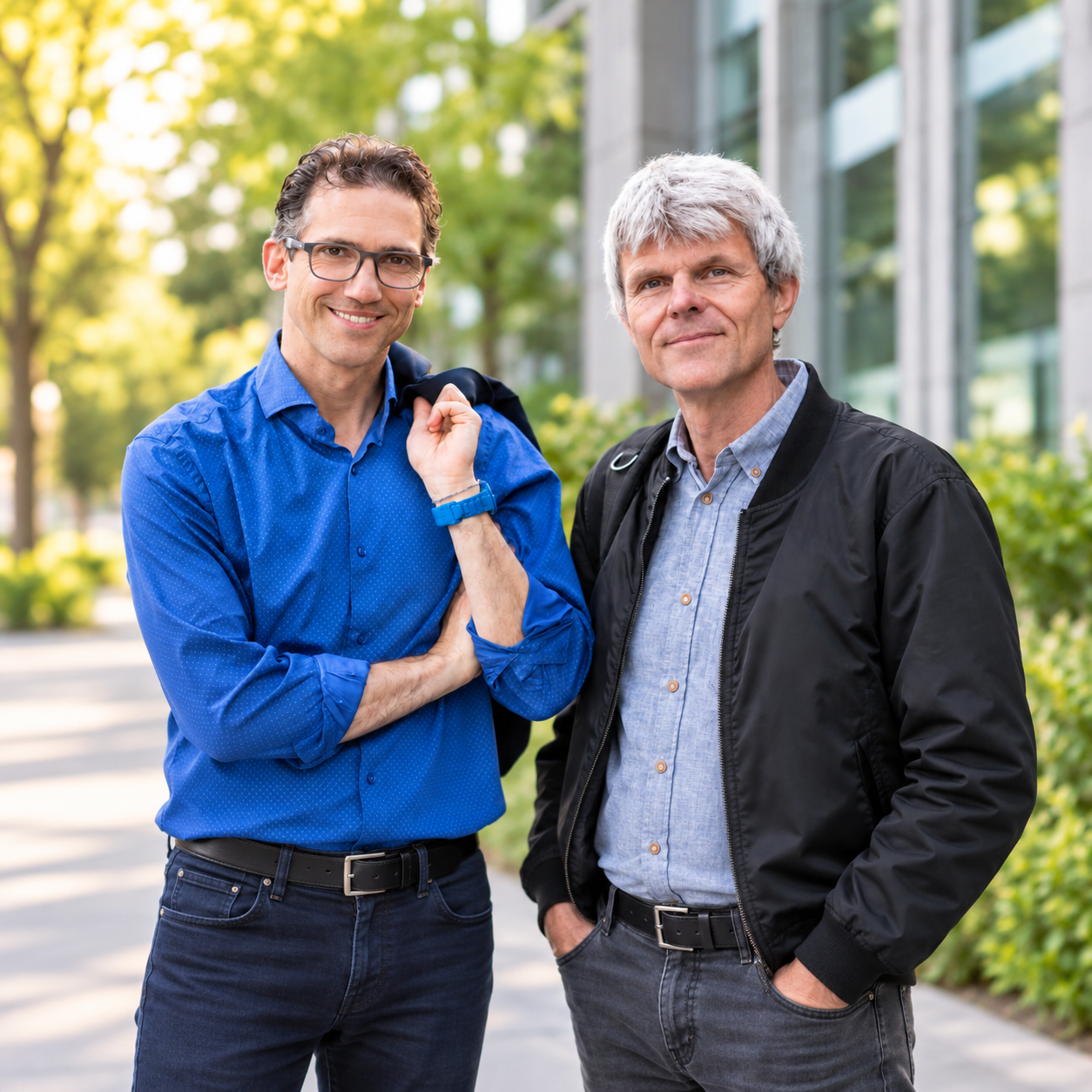
Christoph Albrecht SJ is a Jesuit and theologian with a doctorate in pastoral theology. He brings many years of experience as a leader of retreats and courses, and in pastoral care for refugees and Travellers. Today he is involved in the Jesuit Refugee Service Switzerland and combines spiritual practice with social responsibility.
Andrea Ciro Chiappa is a graduate nutritionist (Dipl. Oecotrophologe) and medically certified fasting leader (dfa). He gained formative experience at the Buchinger-Wilhelmi fasting clinic on Lake Constance and for many years has led fasting hikes and trainings at the Deutsche Fastenakademie. His work combines medical expertise with a holistic view of nutrition, exercise and mindfulness.