
5 Questions for Lama Tsültrim Allione
— Teacher, Author and Founder of Tara Mandala —
May 2026
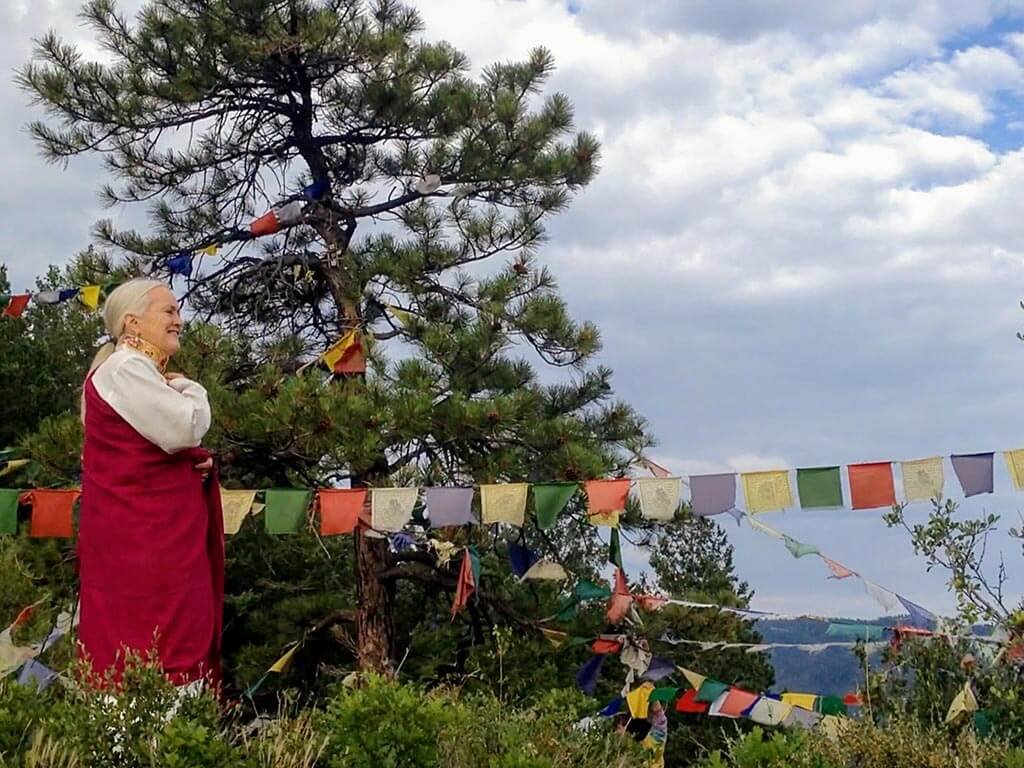
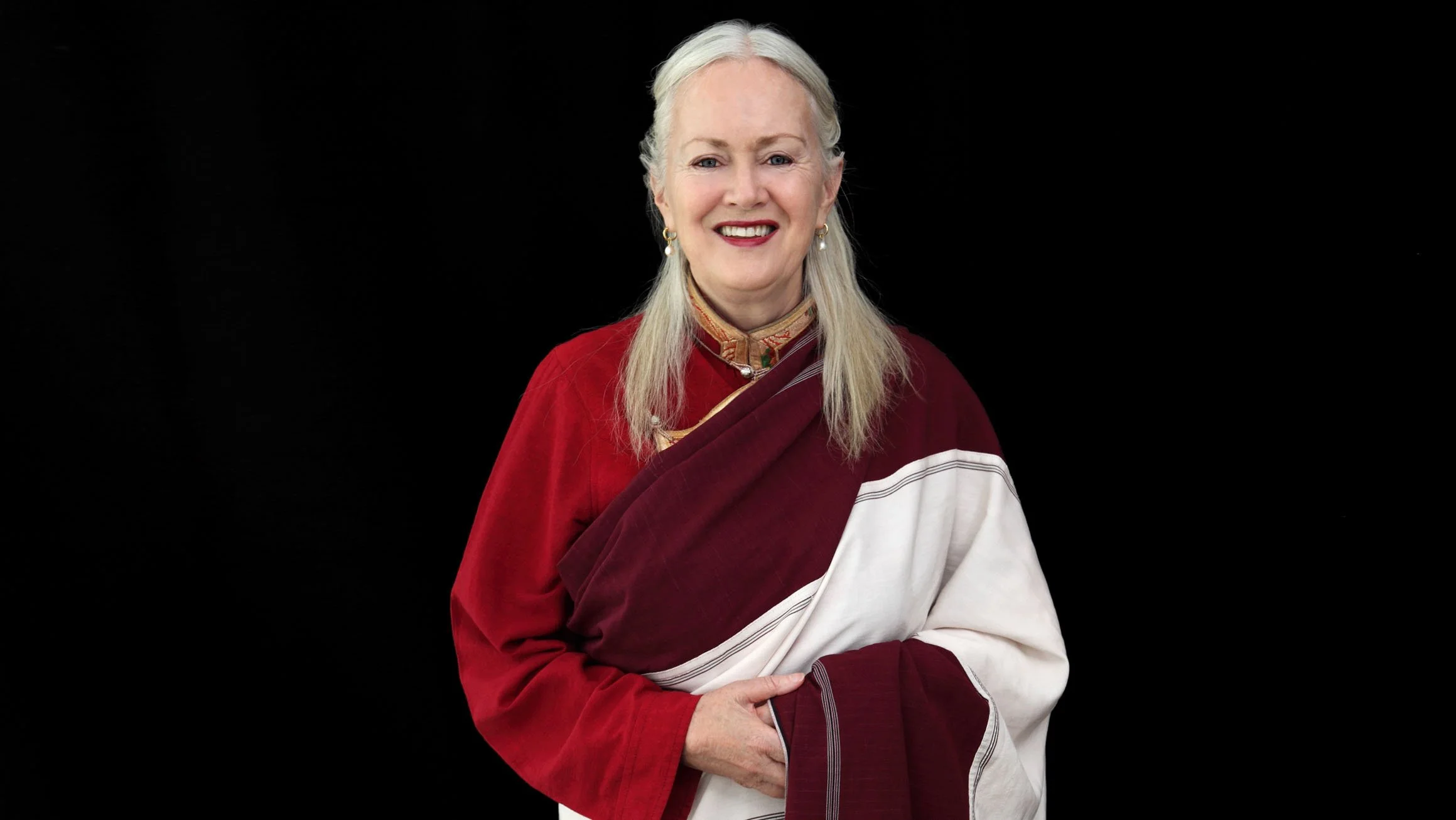
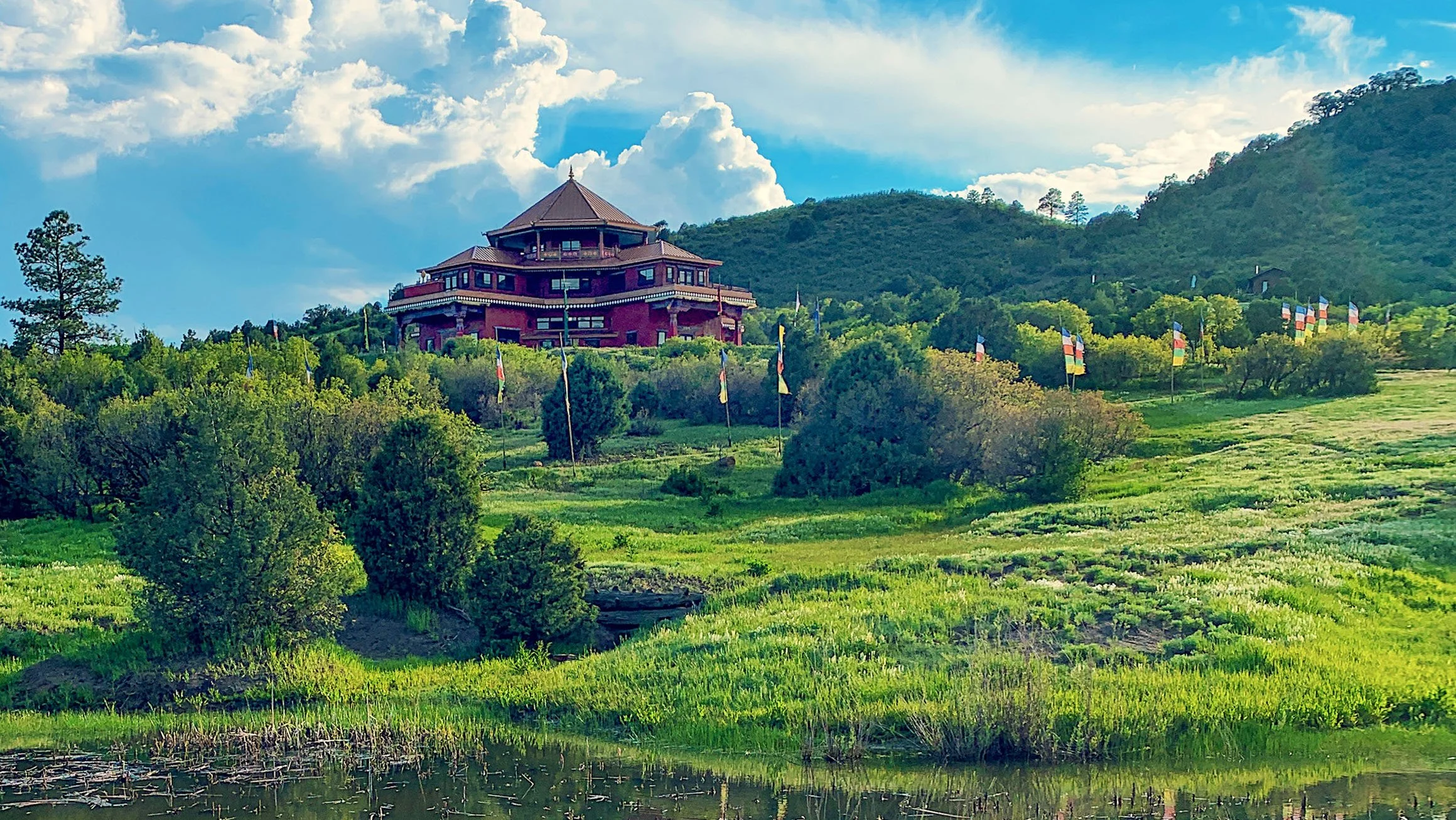
This time in conversation: Lama Tsültrim Allione – one of the few female lamas of our time, recognised emanation of the Tibetan yogini Machig Labdrön, and founder of Tara Mandala, an international Buddhist community and retreat centre in Colorado. She speaks about feminine wisdom in Buddhism, motherhood and the spiritual path, the nature of mind – and where the root of all demons lies.
"You are one of the few female lamas of our time and you founded Tara Mandala as both a place and an international community. How has the understanding of feminine wisdom and leadership changed over the past decades – and what is still needed today?"
When my first book Women of Wisdom came out in 1984, it was the first book to explore the feminine in Buddhism – especially Tibetan Buddhism – and to name the patriarchal structures that are inherent in it. What I felt was important at that time was to have the stories of women. We only had the biographies of male teachers.
Without the stories of women, how do we know how to proceed in moments of change?
This particularly came out of the death of my daughter Chiara, when she was just two months old and died of SIDS. Suddenly I really needed the stories of women – and discovered there weren't any.
In terms of leadership, we are still in patriarchal models. However, the presence of a woman tends to make things more relational, with more awareness of working with emotions and intuition. Tara Mandala was the first Tibetan Buddhist centre to have a sexual harassment policy that all teachers had to sign. This policy was created immediately after the first report of sexual harassment and has been developed and improved over the years. This doesn't mean we have been perfect in our response – but we are always trying to improve.
"In your retreat at Landguet Ried, you will teach Machig Labdrön's core instructions on the nature of mind. What is the essence of this text – and why do you feel it is important to teach it now?"
For many years I have been teaching from translations of these core original texts. But now I am working from the original Tibetan and discovering what words were actually used – and what was lost or shifted in the translations I had been reading.
It's like a revelation to read the original – suddenly so much more makes sense!
I'm excited to share the insights I've gained from this text in the retreat. We will be working from one of the two main texts that are at the root of the oral tradition of Machig Labdrön. It is called: The Great Collection of Chöd Instructions on Prajnaparamita. The text is about the root of demons, the four main demons, and the nature of mind.
Machig Labdrön was an 11th-century Tibetan yogini whose teachings and practice of Chöd – literally "severance" or "cutting through" – have profoundly influenced all schools of Tibetan Buddhism. Her texts are not historical documents but living instructions that touch us just as directly today as they did then.
"Your retreat touches on how fear, confusion and inner contraction arise – and how these patterns can begin to dissolve once recognised. From your point of view, what is the first essential step in this recognition?"
To know that the root of fear, confusion and inner contraction is one's own mind. The first line in the text is:
"The root of all demons is one's own mind." – Machig Labdrön
That may sound alarming at first – yet it also holds a great liberation. Because what arises from one's own mind can also be recognised and transformed through one's own mind. The four main demons the text speaks of are not outer beings. They are patterns of clinging, resistance, desire and aversion – familiar inner dynamics that we all know. As soon as we recognise these patterns for what they are, rather than taking them for reality, something begins to dissolve.
That is precisely the heart of the Chöd practice: not fighting, but recognising. Not suppressing, but nourishing – in the spirit of Machig Labdrön's own method, which I also developed in my book Feeding Your Demons. The opposite of resistance is openness. And openness is the beginning of wisdom.
"You have a family, including children and grandchildren, as well as a deep spiritual path. How does the connection between Western family life and Tibetan tradition manifest itself in your daily life?"
Well, now I am in the phase of being a grandmother – so I am much more free in terms of my time. There were many years as I was raising my children that I had very little time for myself. Now I don't live near any of my children, but we communicate often, almost daily, so my role is more one of support – for them as parents, and the chance to develop individual relationships with each of my grandchildren. They are so different and all magical and interesting in their own ways. I think grandparenting is the payback for parenting.
Tara Mandala was, in a sense, my fourth child. When I started it, I had many dreams that I had a newborn baby, and it has certainly taken as much – if not more – effort than each of my children. I was suddenly thrown into a position where I had no training as an organisational leader, fundraiser, and guide for a community. I did my best – and learned that I am not a good administrator!
I know that becoming a mother was really important for my path, because it tested so many things that had been more conceptual when I was a nun – like patience. In Mahayana Buddhism, the example of the mother is often given when we speak about the training of a bodhisattva. Parenting turns these qualities – love, compassion, patience – not into concepts, but into lived experience. I think that is the reason.
"Is there anything in everyday life that still reliably throws you off?"
If anything is difficult for my children or my grandchildren, then I feel that – and it throws me off until it is resolved. That is perhaps the purest expression of the bodhisattva ideal in daily life: the inseparability of one's own wellbeing from that of the people one loves.
And if I feel I have not handled a situation skillfully – if I was not able to express myself clearly with wisdom – that throws me off too. The wish to act with skill and to embody clarity is deeply rooted in me. And the honest recognition when that has not been possible remains as an inner echo.
Perhaps that is also a sign that the path of practice is never complete. We don't practise in order to become untouchable one day. We practise in order to engage more consciously with what moves us – with honesty and, as much as possible, with compassion for ourselves.
"We don't practise to become untouchable. We practise to engage more consciously with what moves us."
Interview: Stefanie Weilenmann
Lama Tsültrim Allione leads the retreat "Machig Labdrön and the Nature of Mind" at Landguet Ried – a rare opportunity to receive teachings directly from one of the most significant Western lamas of our time, in the living transmission lineage of Machig Labdrön. At the centre of the retreat: Machig's core instructions on the nature of mind, the teaching on the four demons, and the transformative practice of Chöd – cutting through, recognising, releasing.
Would you like to experience these teachings not just in reading, but in practice? Find all details about the retreat with Lama Tsültrim Allione here >>>
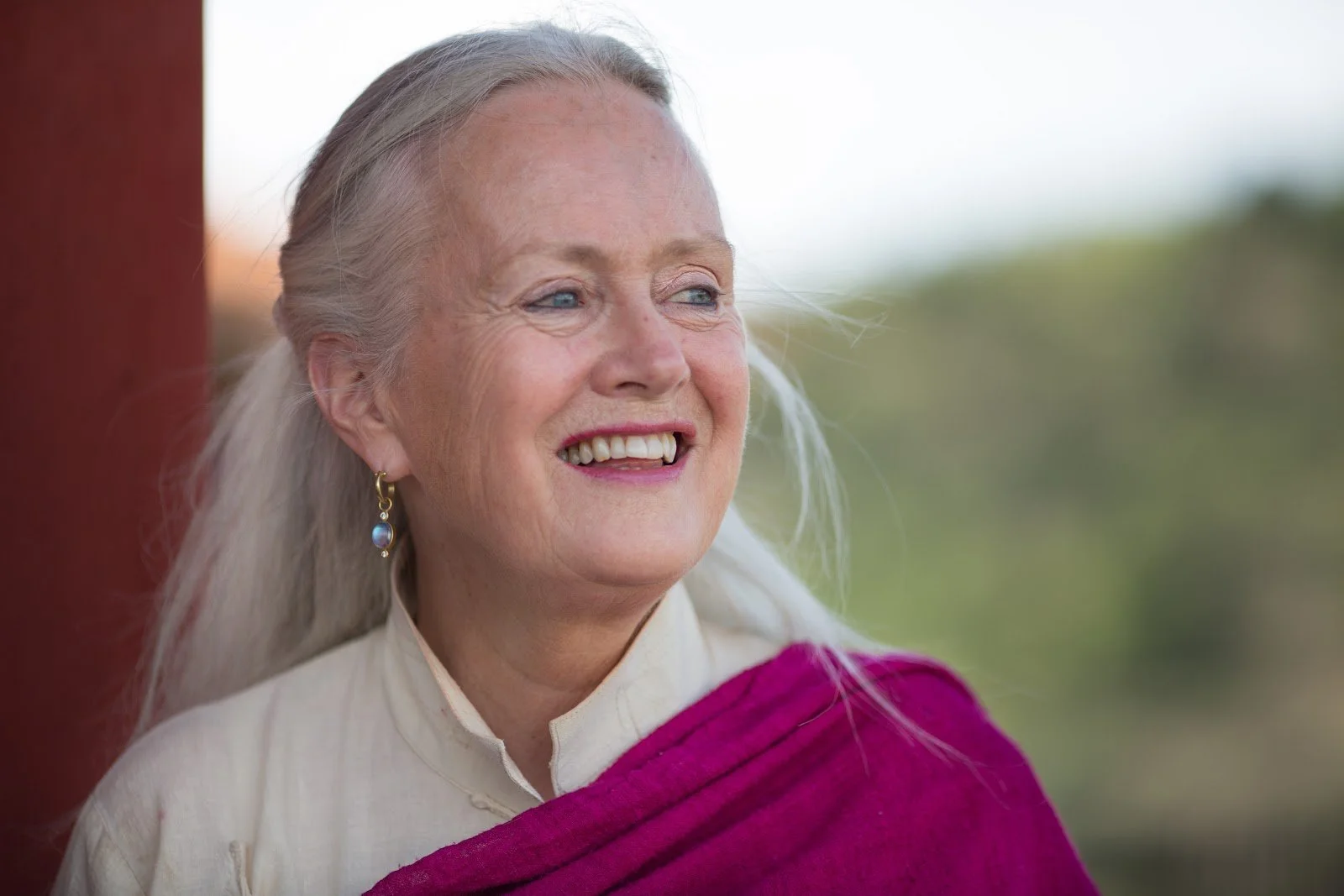
Lama Tsültrim Allione is the bestselling author of Women of Wisdom (1984), Feeding Your Demons (2008) and Wisdom Rising – Journey into the Mandala of the Empowered Feminine (2018). She is the founder of Tara Mandala, a 700-acre retreat centre with a three-storey temple dedicated to the divine feminine in the Buddhist tradition, located near Pagosa Springs in southwest Colorado. In 1970, at the age of 22 in Bodhgaya, India, she became the first American to be ordained as a Tibetan Buddhist nun. She later disrobed, married and became the mother of three children; today she is a grandmother of six. In 2007, she was recognised in Tibet and Nepal as an emanation of the renowned 11th-century Tibetan yogini Machig Labdrön, and in 2012 she received the Machig Labdrön Empowerment from His Holiness the 17th Karmapa.