The path within is a path to life
— A text by Marcel Steiner —
March 2026
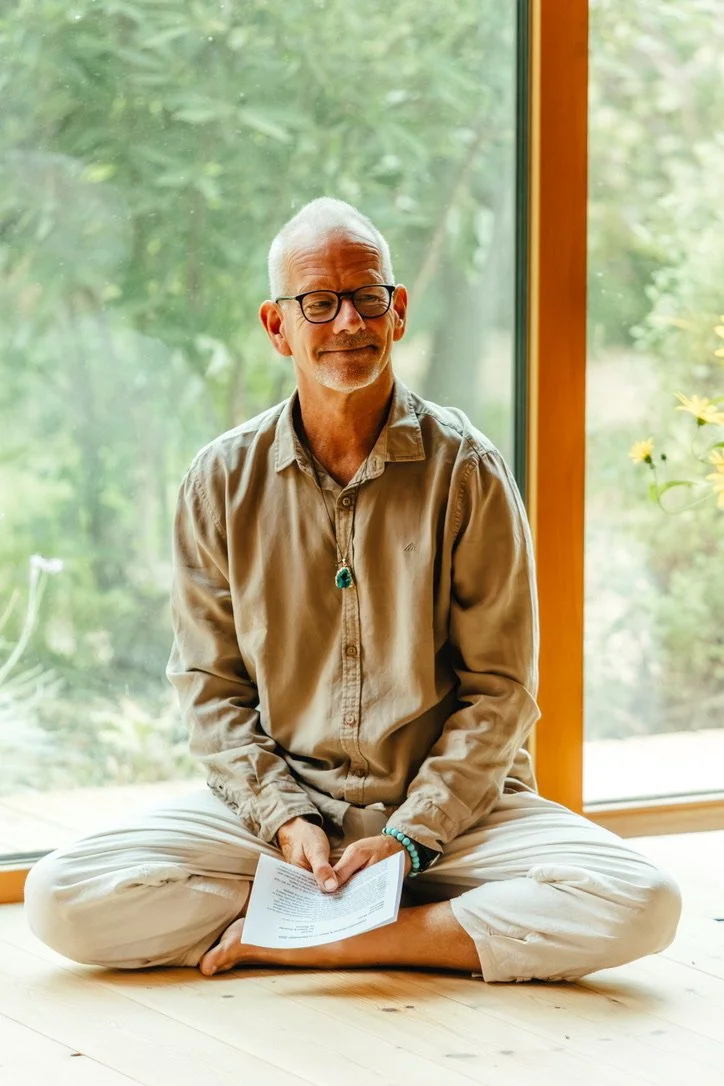
A personal and moving exploration of meditation, the Big Mind concept and inner voices. In his text, Marcel Steiner shows how self-criticism, shame and inner conflict can give way to a kinder and deeper approach to life.
Much of what I have done in my life has been driven by a deep sense of inadequacy and shame, and by the feeling that I had to earn the right to live.
When I visited the ecumenical community of Taizé in 1984 as part of my theology studies, I was struck by a deep conviction: whatever we call it — God or life — it is profoundly present in our existence. Later, I began an intensive exploration of the Zen tradition. For over 30 years, I have been practising something that cannot be practised: simple, pure being.
Rumi showed me the way with his words: 'Sink deeper... and deeper... and deeper... into ever-widening circles of being!'
During this process of self-reflection, I came to recognise all the different aspects of myself: my thoughts, my feelings, my history and my body. For a long time, I believed that meditation meant silencing these voices, which seemed like a hopeless endeavour. I realised that for everything I resist, I actually end up giving it more power.
As the English saying goes: 'What you resist, persists.'
It was the Big Mind process that provided me with a tool to cultivate a more positive relationship with these voices, or sub-personalities. During the process, we don't just think about these aspects; we fully immerse ourselves in their perspective and explore them from within. What does a voice feel like? How does it manifest in the body? Take the voice of the protector, for example. We don't go through this process alone, but share it as a group. To achieve this, the whole group adopts a particular voice and each person responds to my questions as if they are that voice. What is your purpose? What do you do best, and what is your gift? How are you perceived by the ego?
When we invite our inner aspects to express themselves freely in this way and they realise that they are being seen and heard, something amazing happens: they reveal their true nature and gifts.
We then realise that we have usually only perceived a fraction of them, often focusing on the difficult or burdensome aspects in particular. As these voices express themselves freely, these aspects tend to subside and we are able to delve deeper. This enables us to connect with our deepest self and recognise it as our true home. The fascinating thing is that every voice, however trivial it may seem, ultimately shows us the way to our essence. When we embrace this and return to everyday life, we can accept all our inner aspects anew and allow them to have a positive impact.
This work has also transformed my meditation practice. It has become more relaxed. Instead of fighting against something, friendships emerge both within and without. When we recognise ourselves as the boundlessly vast space of conscious being, everything finds its place and time. We do not become perfect, but we recognise our wholeness. This also encourages us to treat the people we meet with greater compassion. Ultimately, all good paths lead to this life, this body and this moment. Within it, everything we so often imagine to be absent is present.
I see the opportunity and challenge of our time as being that, although many paths lie open to us, we can easily become overwhelmed by their diversity and fail to commit fully to any of them. However, this diversity also offers us the chance to find an approach that suits us. Healthy diversity frees us from the notion that there is only one right way. As the Hasidic tradition so beautifully puts it: 'Any path can lead you to God, if you walk it in such a way that it can.' Whereas I used to measure the depth of an experience by how much it differed from everyday life and offered me something extraordinary, today I judge it by asking myself: Does it help me to be kinder to myself, my fellow human beings, and the world? Nothing extraordinary lasts forever; it eventually fades away. However, the opportunity to live with compassion presents itself to us at every moment.
The late Zen Master Bernie Glassman, one of my teachers, always said, ‘Show me how you treat yourself, your fellow human beings, and the world, and I will show you how enlightened you are.’
When asked on his deathbed what essential advice he would like to pass on, Aldous Huxley said: 'Be kinder to your neighbours!' Trite? Hardly. After all, it is precisely our everyday relationships that reveal how we treat ourselves and the world. Ultimately, it's all about love, as Jesus so succinctly put it long ago: ‘Love your neighbour as yourself.’ Sometimes it seems to me that we have imperceptibly altered this phrase to: 'Love your neighbour, not yourself' – as if self-love were synonymous with selfishness.
On this path of love, we accompany one another. This is how I understand my role: to be permitted to accompany others on their journey. When I became a Zen teacher in 2009, I was given the beautiful name ‘Kyosa’, meaning 'bridge-builder'. While I learnt about ecumenical dialogue in Taizé and engaged with interfaith dialogue through Zen, my journey as a whole has led me from a more ascetic form of spirituality that transcends this life to one that leads deeper into it.
Or, to put it in Rumi's words: ‘All my life, I have wandered the world in search of God. When I returned home, I found Him standing at the door of my heart. He said to me, “I have been waiting for you here all along.”’
To me, Big Mind is a wonderful, friendly and vibrant invitation to explore life through meditation and the exploration of inner voices.
A text by Marcel Steiner, in collaboration with Stefanie Weilenmann
From 26 to 28 June 2026, Marcel Steiner will lead the 'Open Mind – Big Heart' retreat at Landguet Ried. By combining meditation with the Big Mind process, a quiet yet vibrant space is created in which inner voices can be explored, acknowledged, and understood in greater depth. This allows tension and inner struggle to give way to greater kindness, expansiveness and connectedness. An open mind is all that is required; prior meditation experience is helpful but not essential.
Would you like to experience this space of silence and awareness for yourself, as well as understand it? You can find all the details about the retreat with Marcel Steiner here >>
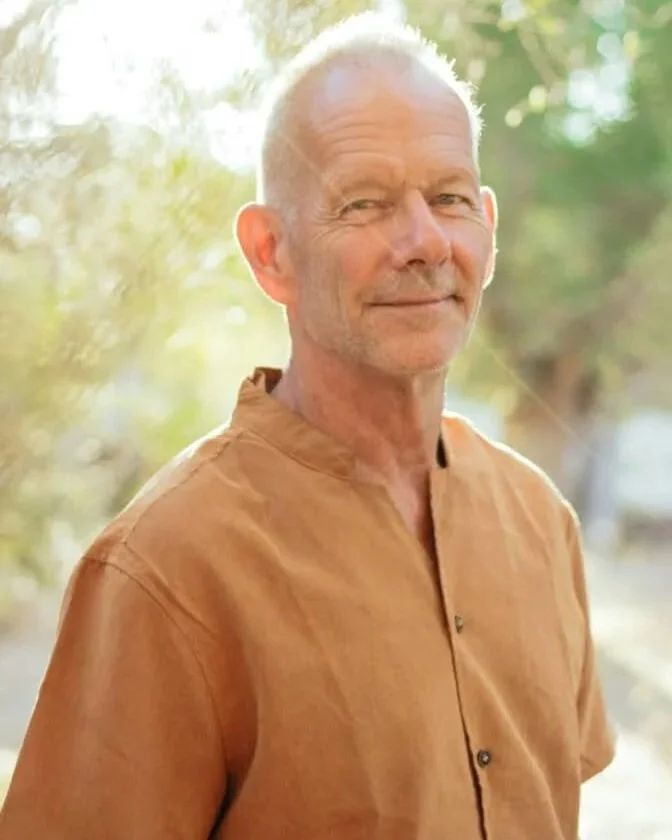
Ever since childhood, Marcel Steiner has been deeply drawn to the mystery of life. Initially, this manifested itself primarily through spending time outdoors in nature, but later it took various paths leading inwards. For him, this has always found expression in nature: first in the forest, which he has loved since childhood; later in the mountains; and today, above all, in and by the sea.
Over 40 years ago, he discovered fasting, and over 30 years ago, he discovered Zen meditation. For the past six years, his work with plant medicine has accompanied and nourished him on his journey.
He now works with various elements (Zen, fasting, Big Mind and substances) that support and enrich one another. He combines these in different ways, depending on the format of the retreat.